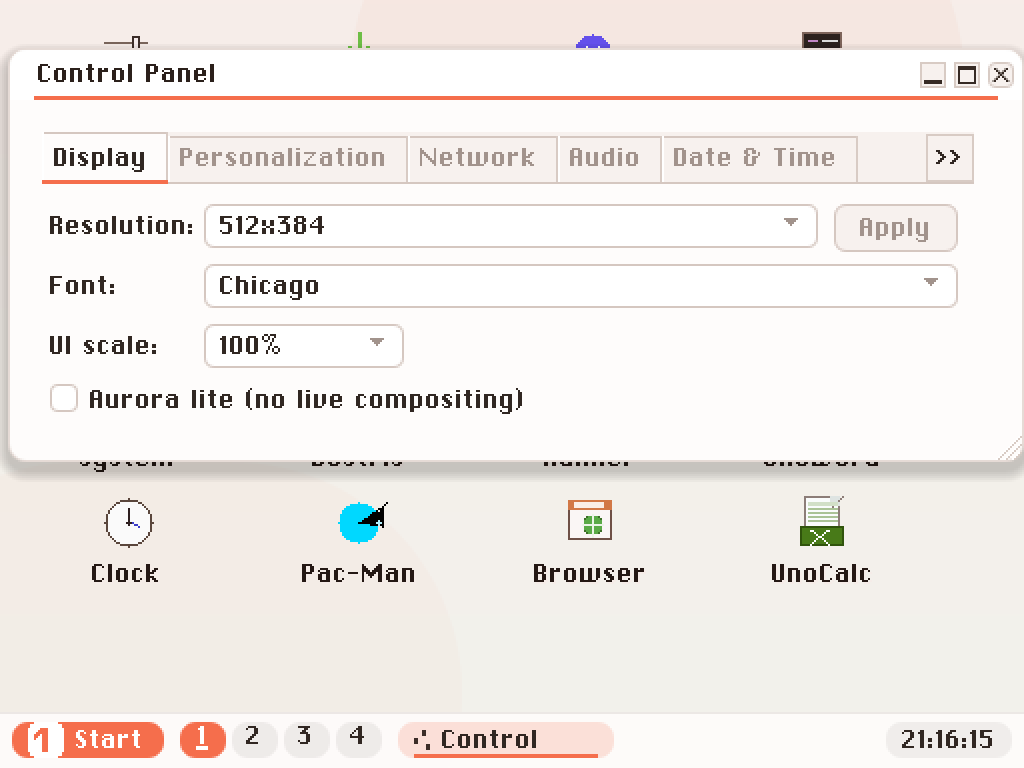
There is no plugin and no server doing the work. The whole machine is
running in this tab.
QEMU compiled to WebAssembly emulates a PC: an
x86-64 CPU, a VGA card, an IDE disk and a PS/2 keyboard and mouse.
Every instruction UnoDOS executes is translated to WebAssembly and run
by your browser, on worker threads. That is why it needs a recent
desktop browser: threaded WebAssembly needs
SharedArrayBuffer, which a page only gets when it is
served cross-origin isolated.
The disk is a 96 MiB image of the real release, shipped compressed at
about 19 MB and expanded here in the browser. About half of that is
Freedoom: the image carries Duum, the Doom engine written in Python,
and its 28 MB of game data. Duum runs here at well under one frame a
second and takes minutes to reach its first frame - it is worth seeing
rather than playing, and the browser port of Duum
is the one to actually play. It is a RAM disk once it
arrives, so the machine can write to it and nothing survives a reload.
The screen you are looking at is the guest's framebuffer, converted
and copied into a canvas each time the machine redraws.
Written up in full, including what it costs and what it cannot do, in
BROWSER-WIDGET.md.